
August 10, 2026 · 4 min read
Flagstone vs. Stamped Concrete: Which Is Right for Your North Texas Patio?
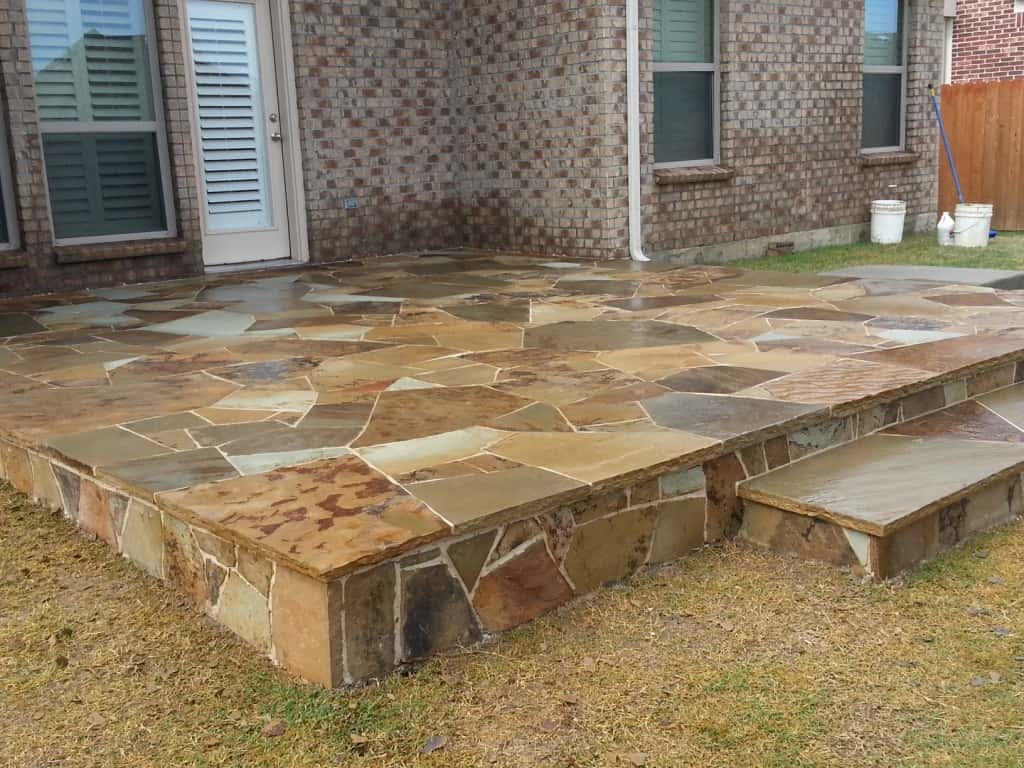
It's the first question in half our patio consultations: natural flagstone or stamped concrete? Both can look fantastic on day one. The honest answer is that they age differently, cost differently, and fail differently — and in North Texas, the soil under your patio matters as much as the surface on top of it.
The case for flagstone
Natural stone never fakes anything — every piece is unique, and the material itself is essentially permanent. When our clay soil moves (and it will), a mortar-set flagstone patio on a properly reinforced base moves as a unit, and individual stones can be reset if a joint ever opens. Repairs are invisible. The trade-off is cost: hand-fitting stone is skilled labor, and good flagstone runs meaningfully more per square foot than concrete.
The case for stamped concrete
Stamped concrete delivers a patterned, colored surface at a lower price point and installs faster. The catch is that it's still one continuous slab: when clay soil heaves, a crack telegraphs across the pattern, and there's no invisible repair — color-matching a patch into a stamped surface is nearly impossible. Sealer maintenance every two to three years is also part of the deal to keep color from fading.
What we recommend
If the patio is a long-term centerpiece — an outdoor kitchen or fireplace is going on it — flagstone earns its premium over a couple of decades. If you're covering a large area on a tighter budget, quality stamped or broom-finished concrete with proper steel and joints is a legitimate choice. Either way, the base preparation decides how it looks in year ten. That part is non-negotiable.
Thinking about a project like this?
We give free on-site consultations across North Texas. Request a quote →